
City of Duquesne
Contents
Click on the link to move to that section of the page
Demographics, Municipal Staff and Officials, General Information, History.
|
Population |
7,332 |
|
Minority Population |
3,745 |
|
Total Housing Units |
3,768 |
|
Percent Vacant |
15.6% |
|
Median Household Income |
$19,766 |
|
Per Capita Income |
$12,067 |
|
Individuals Below Poverty Level |
2,523 |
More detailed municipal profiles are available from the US Census.
|
Frank Piccolino |
City Manager City of Duquesne 12 South 2nd Street Duquesne, PA 15110 |
412-469-0544 (phone) 412-469-3795 (fax) |
|
Phyllis Senato |
City Clerk City of Duquesne 12 South 2nd Street Duquesne, PA 15110 |
412-469-3770 (phone) 412-469-3795 (fax) |
|
Phillip Krivacek |
Mayor |
|
Eugene Capristo |
Council Member |
|
Timothy Petrisko |
Council Member |
|
George Matta, Sr. |
Council Member |
|
Barbara O’Neil Lane |
Council Member |
COMMUNITY FACILITIES
Quality of life is enhanced by the community facilities and services offered by both public and private entities. Community facilities and services common to Duquesne include: Public Buildings, Police, Fire, Emergency Management Services (EMS), Public Works, Schools, and Libraries.
PUBLIC BUILDINGS
Public buildings include: governmental buildings, municipal garages and storage sheds, libraries, hospitals, school buildings, recreation centers, post offices, fire stations and emergency medical services buildings.
Duquesne City Hall
Duquesne City Hall is located at 12 South Second Street. It houses the following offices: City Manager, City Clerk, City Police Department, City Water Billing Department, City Treasurer, City Public Works Director and the city garage which houses the city's public works equipment and staff.
Police
The City of Duquesne Police Department is located on the first floor of City Hall. The Police Department consists of sixteen full-time and four part-time officers. Police calls are dispatched by the City of McKeesport Police Dispatch Center. Duquesne Police Department averages 10,000 calls per year.
Unique to Duquesne is the city's patrol of the Burns Heights County Housing Project. City police officers patrol the Burns Heights community by automobile and on foot. Officers on foot patrol have become part of the Burns Heights community. Duquesne's unique approach to community involvement in police activities has lead to a reduction in the number of crimes committed in the Burns Heights community.
Duquesne's police department sponsors several programs aimed at developing community relations and educating the public, especially children, on crime prevention. Programs include DARE, Burns Heights Community Day, Bike Rodeo, and NAACP participation.
Fire Protection
In 1995, the Duquesne City Volunteer Fire Department was formed with thirty charter members. Prior to 1995, the city was one of the last municipalities in western Pennsylvania to have a full-time paid fire department. The Fire Chief is the only remaining paid fire fighter in the city.
The fire station is located at 12 South Second Street on the ground floor of City Hall in the same location as the former paid fire department. The volunteer fire department sponsors educational programs aimed at fire prevention and fire emergency procedures. Fire calls are dispatched through the City of McKeesport Police Dispatch Center.
Ambulance Service
Ambulance service is provided by the city's ambulance service located at 12 South Second Street. This facility is staffed by certified ambulance personnel 24 hours a day. Emergency patients are typically transported to McKeesport Hospital, which is less than 3 miles from the city.
Public Works
Currently, the City of Duquesne has a full-time Public Works Department located in the city hall building. There are thirteen full-time and two seasonal employees in the department. Typical duties consist of street maintenance, snow plowing, park maintenance, storm sewer catch basin cleaning, building maintenance, and the overall maintenance of all public property within the city.
RECREATION
Parks and recreational facilities are necessary for all persons regardless of age or physical impairment. The City of Duquesne has several neighborhood and community parks that are well maintained and with walking distance for most residents.
Duquesne Place
About four acres in size, this park is the largest park in the city. It is located at Overland Street in the eastern end of the city, near the West Mifflin border. The park has undergone a variety of improvements over the past three years, funded by the city's Community Development Block Grant (CDBG) program and the Allegheny County Department of Planning and Economic Development. This park includes a tennis court, two basketball courts, two lighted ball fields, softball field, large playground area, and several benches and shade trees. Overall the park is in good condition with only seasonal maintenance needed.
Polish Hill Park/Playground
Located in the northern section of the city adjacent to the Duquesne High School Athletic Fields, this is the second largest park in the city. The park is about three acres in size and contains new park equipment. This park offers several recreational facilities such as a tennis court, basketball court, two ball fields, playground equipment, picnic tables, benches and shade trees.
Hamilton Avenue Playground
Located between Second and Third Streets along Hamilton Avenue this park is about a quarter acre is size. The playground underwent a complete renovation in 1992, funded by CDBG. A small grassy area located adjacent to the playground complements the equipment and park benches.
City Park
Duquesne's City Park is located adjacent to the Duquesne City Hall at the corner of Second Street and Grant Avenue. This facility is a predominantly passive recreation facility, seeing significant use during warmer months. The park contains benches, pavilions, shade trees, and a basketball court. It is in good condition needing only seasonal maintenance.
Wylie Avenue Park
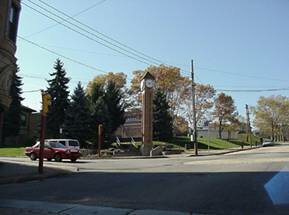
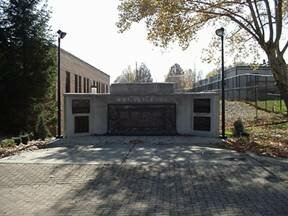
About 1/2 an acre in size, this park is located at the corner of Wylie Avenue and Elm Street in the southeastern section of the city. In 1992 the park underwent an equipment upgrade. The park contains a basketball court, playground equipment, tot lot, pavilion, benches, and shade trees. The park is maintained by a joint cooperative effort between the City of Duquesne and the Macedonia Baptist Church.
837 Parklet
This passive recreation area is located along Route 837 near the Grant Towers Senior Citizen Complex. The park let is maintained by a volunteer community organization: The Christ the Light of the World Men's Club. The park let includes benches and shade trees in a lighted area.
Burns Heights Park
This is considered a neighborhood park because it serves the Burns Heights community. The park is quipped and maintained by the Allegheny County Housing Authority. The park includes benches, pavilion, picnic tables, a multi-use field, and playground equipment.
Steel Industry Heritage Trail
The proposed Steel Heritage Industry Trail is planned to travel through Duquesne near Rt. 837. At this time plans are being considered to include the trail within the city center.
RECREATIONAL ORGANIZATIONS
Private and non-profit organizations are an invaluable community resource for recreational activities. These organizations sponsor recreational programs, participate in the development of community activities and maintain recreational facilities in the city.
Boys and Girls Club of Duquesne and West Mifflin
The Boys and Girls Club of Duquesne and West Mifflin is a non-profit organization located at 29-31 North Third Street, Between Hamilton Avenue and Grant Avenue, in the City of Duquesne. Full and part-time recreation directors staff the facility. Programs are offered to children and young adults between the ages of 5 and 18. These programs include cultural arts, arts and crafts, education, leadership development, social recreation, outdoor education, and personal enrichment. A minimal $15.00 dollar per year membership is required.
Monongahela Yough Recreation (MYREC)
Formed in 1984 as a non-profit organization, MYREC is located at 519 Walnut Street McKeesport, PA 15132, ph# (412) 678-1727. One full-time and several part-time employees staff MYREC. MYREC serves eleven municipalities including Duquesne.
Duquesne Teen Council
Located in the Duquesne-West Mifflin Boys and Girls Club, the Duquesne Teen Club was founded in 1992 to provide community service programs to the city. Funding to start the council came from an $87,000.00 grant from the Heinz Foundation of Pittsburgh, The teen council has about twenty members who perform community service projects such as park clean-ups, teen dances and activities.
REGIONAL RECREATION FACILITIES
There is an abundance of regional recreational facilities within a fifteen-mile radius of Duquesne. These facilities include: the Pittsburgh Zoo; Three River's Stadium; The Civic Arena; Kennywood Park; Schenley Park; Carnegie Science Center; Carnegie Museum; Phipps Conservatory; The National Aviary; The Pittsburgh Children's Museum; Sandcastle Water Park; White Oak County Park; and Clairton City Pool.
MUNICIPAL GOVERNMENT
Duquesne is chartered as a Class #3 city according to the Pennsylvania Third Class Cities Code. Many small municipalities have chartered themselves as cities to obtain larger amount of federal entitlement grants that are based on a municipality's city designation and population. The City of Duquesne receives approximately $300,000.00 annually as a CDBG entitlement municipality.
City Government
Currently, Duquesne's city government is the city council-manager form. The city council-manager form of government was chosen to provide centralized authority of day to day operations of city departments. Duquesne City Council is comprised of four council members and a mayor who are elected at large for four year terms. Each city council person is responsible for chairing a committee associated with the carious city service departments. They work in coordination with the mayor and city manager.
The Mayor is elected for a four-year term and cotes as a counsel member. The mayor is responsible for overseeing city meetings and committees among other duties. This involves meetings with the mayor, department heads, councilpersons, and various other personnel.
CITY BOARDS AND AUTHORITIES
Sanitary Authority
Duquesne has recently formed a Sanitary Sewer Authority. One of the goals of the authority is to undertake such projects as treatment plant rehabilitation and expansion, separation of combined sanitary and storm sewers, replacement of old sewers, and general line renovation. The sanitary authority is permitted to borrow low interest loans for capital projects and improvements.
Water Department
Duquesne operates its own water system. The city began contracting for water service in 1996 from the Municipal Authority of Westmoreland County. Billing is still handled locally at the Water Department Office on the first floor of Duquesne City Hall. The authority has about 3,600 water consumers and is staffed by a full-time director, a full-time receptionist/secretary, and five full-time maintenance employees.
Duquesne Redevelopment Authority
In 1995, the City of Duquesne Redevelopment Authority was created to acquire and dispose of vacant property, underwrite new development, leverage new funding for development projects, and develop tax increment financing for development projects. The authority is comprised of a five-member board with each member serving staggered five-year terms.
Planning Commission
The Duquesne City Planning Commission is a nine-member board appointed by city council. Members are appointed to four-year terms, on a staggered basis, no more than two new commission members can be appointed in a given year. The planning commission is responsible for updating the Comprehensive Plan, reviewing site plans and subdivisions, annual reports and other planning activities.
Zoning Hearing Board
The Duquesne Zoning Hearing Board is comprised of three members appointed by city council for three-year terms. The terms are staggered so that one member's term expires each year. The Zoning Hearing Board listens to variance requests and has the authority to grant or deny such a deviation from the city's zoning ordinance. The board also hears the appeals of aggrieved parties where it is alleged that an officer of the city misapplied an ordinance provision.
Zoning Officer
The Zoning Officer is appointed by city council, he or she reviews and issues zoning permits. The officer also has enforcement responsibilities under the city zoning ordinance and may institute civil enforcement proceedings as a means of compliance.
OTHER NON MUNICIPAL GOVERNMENT AGENCIES
Duquesne Business Advisory Corporation
The Duquesne Business Advisory Corporation (DBAC) was established in 1977 by a small group of business leaders who wished to examine the possibility of improving conditions along West Grant Street. The DBAC has become very active in economic and residential development throughout the city, by operating several programs including the Enterprise Zone.
Enterprise Zone
The Enterprise Zone Program is a Grant Program designed to assist financially disadvantage communities to prepare and implement business development strategies and loan funds to enterprise zone businesses to assist in financing business growth and job creation. It is a private sector-driven program, compatible with public sector purposes and designated to increase the job opportunities within an Enterprise Zone. The City of Duquesne is associated with McKeesport and Clairton in one Enterprise Zone and is also included in the Steel Valley Enterprise Zone. Financial incentives and programs associated with the Enterprise Zone include:
**Assistance in revising plans and ensuring that commercial loan applications
are given appropriate consideration.
**Low interest gap loans to reduce bank risk exposure and secure bank approval
of commercial loan applications.
**Export market development.
**Federal procurement bid assistance
**New product incubators
**Customized job training
**New product market assessment
**Technology transfer applications
**New product technological assessments
**Small business-sitting services
**Labor-management conflict resolutions assistance
The area that is now the City of Duquesne was originally part of Mifflin Township, Allegheny County, which covered much of the area south of the Monongahela River. The city has often been described as a "steel town," and in fact the steel mill pre-dated the city itself. Construction on the steel plant began on May 28, 1885, and by the spring of 1886, the Duquesne Steel Company was producing steel. In 1888, Allegheny Bessemer Steel Company purchased the mill, but the plant was dealt a blow when the workers went on strike in April 1889. The plant was shut down for more than five months and was on the verge of closing for good when it was purchased by the Carnegie Steel Company.
With the advent of the mills came an influx of people into what was still largely a rural area. The population rapidly increased in 1891 and the decision was made to incorporate Duquesne as a city. This was accomplished in September of that year and the first election was held in February 1892. By 1916 the population had expanded to 19,000 people, making Duquesne the fourth largest in Allegheny County.
The premier amenity of the city at this time was the Carnegie Library, the third built in the Monongahela valley, and one of hundreds to be built around the country from money provided by Andrew Carnegie. The $300,000 library was a huge structure that also housed a gymnasium with an Olympic-size swimming pool and a music hall. It was torn down in 1968 because it had become too expensive to operate.
As the steel business boomed during and after World War I, so did Duquesne's population. It eventually reached its peak of 21,396 in 1930. During the Depression, the population dropped slightly, but by 1950, it was still over 17,000. About 16 percent of the population were foreign-born residents, reflecting the large number of immigrants who flocked to the mill town. Success of the city was generated by the success of its steel mills. In 1948, the Carnegie-Illinois Steel Corporation employed over 8,000 people at its Duquesne Works.
Unfortunately, the fortunes of the city remained closely tied to those of the Duquesne Works through the latter half of the twentieth century. The mill began a slow descent in work force and production in the 1960s that became a rapid slide in the 1970s. After nearly a century of service, the mill closed its doors for good in 1980, throwing the city's economy into a tailspin from which it has yet to fully recover. The people of the city would have to learn to live without the mill that had forged its very existence.
In recent years, the City of Duquesne has continued to reshape itself by embarking upon many positive initiatives. The Regional Industrial Development Corporation bought the mill site and began the process of demolishing many of the buildings, cleaning up environmental hazards and enticing new firms into the site.
SVCOG Home Page Municipalities Page